

Are Ride Modes on the 2026 Harley-Davidson® Low Rider® S useful for everyday riding around Florence, KY?
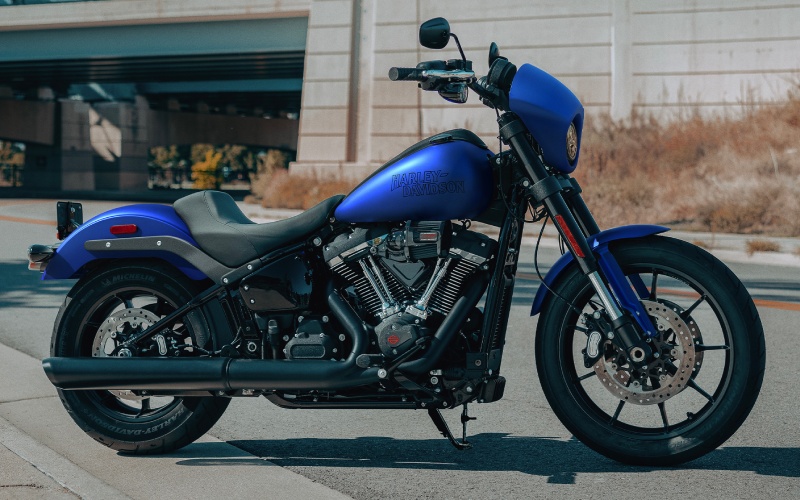
Queen City Harley-Davidson® - Are Ride Modes on the 2026 Harley-Davidson® Low Rider® S useful for everyday riding around Florence, KY?
Ride Modes on the 2026 Harley-Davidson® Low Rider® S were designed to serve real riders on real streets—like those threading through Florence, KY, from morning commutes on Dixie Highway to late-night loops past neighborhood storefronts. By tailoring throttle response and electronic intervention to conditions, the bike helps you maintain that calm, connected feel whether the pavement is hot and dry or cool and damp.
Each selectable mode blends engine mapping with Rider Safety Enhancements so the motorcycle behaves the way you expect when you roll on or roll off. It is less about chasing numbers and more about harmonizing power delivery with grip, traffic flow, and the flow of your day. That is what makes the system so valuable for everyday riders who want one bike to do it all.
- Consistency in changing weather: Choose a calmer, more moderated response for slick mornings, then go sharper as the day dries out.
- Confidence on mixed routes: Transition from stop-and-go to open lanes with engine behavior that stays predictable and smooth.
- Focus in the cockpit: Since the bike’s electronics manage traction and braking support in the background, your attention stays on the road ahead.
Beyond the modes themselves, the platform’s Cornering Rider Safety Enhancements—C-ABS, C-TCS, and C-DSCS—refine support when leaned over. That means steady, measured braking inputs mid-turn and a calmer chassis if you downshift or roll off abruptly on imperfect surfaces. When the road surface changes—expansion joints on I-71, wet patches under shade, or dust near construction—these systems help the motorcycle react proportionally, without disrupting your line.
Ergonomics also play a role in how Ride Modes feel. The steep-backed solo seat and upright posture keep you braced for quick transitions, while the 43 mm inverted fork and tall rear shocks communicate grip clearly. With that steady feedback, switching modes becomes intuitive—you feel the difference in throttle pick-up and traction support right away, then choose what complements your pace.
Frequently Asked Questions:
Do I need to change Ride Modes often during a single ride?
Not necessarily. Many riders pick a mode that matches the day’s conditions and leave it there. If the weather or traffic flow changes, switching takes seconds and helps the bike feel consistent with the road under your tires.
How do Ride Modes interact with cornering safety tech?
Ride Modes set the character of throttle response and electronic thresholds, while Cornering Rider Safety Enhancements adjust braking and traction support based on lean. Together, they deliver predictable behavior when upright or leaned—a cohesive, confidence-building layer.
Will I still feel the engine’s character with electronic support active?
Absolutely. The Milwaukee-Eight® 117 High Output keeps its broad, muscular personality in every mode. Electronics are calibrated to assist without muting the motor’s response, so you still get strong drive and a direct, connected feel.
Is there a mode that works best for Florence’s stoplights and short freeway ramps?
Choose a mode with balanced throttle response for smoother launches and lane merges, then move to a sharper setting when traffic opens up. The goal is to keep inputs natural and the chassis settled from block to block.
When a motorcycle’s powertrain, chassis, and electronics operate as a single system, the result is trust. That is what Ride Modes foster on the 2026 Low Rider® S—trust that you can fine-tune the bike’s personality for the day’s ride without sacrificing the V-Twin energy you bought the bike to feel. For hands-on guidance and a walk-through of setup and customization, connect with Queen City Harley-Davidson®—serving Batavia, Dayton, and Florence—with a team that rides this technology and can help you make the most of it on local roads.